
On this page
If you run a service-based business on Shopify, you already know that paid ads get expensive fast. Every click costs money, and the moment you stop spending, the traffic disappears.
But there is another way to drive a steady stream of customers to your booking pages: programmatic SEO.
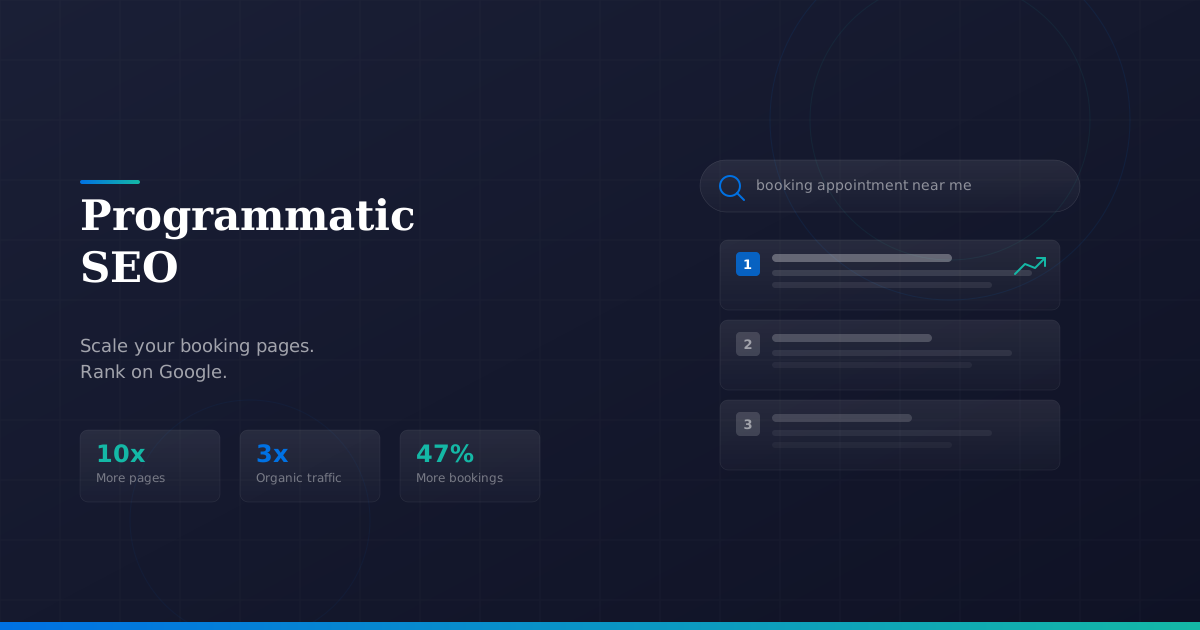
Programmatic SEO is the practice of creating many targeted landing pages from a template, each optimized for a specific long-tail keyword. Think of it as building a net that catches the hundreds of specific searches your customers are already making — searches like "dog grooming appointment in Austin" or "wine tasting near Napa Valley."
In this guide, we'll walk through what programmatic SEO is, why it works especially well for service businesses, and how you can put it into practice on your Shopify store using Servicify.
What Is Programmatic SEO?
Traditional SEO focuses on a handful of high-value pages — your homepage, a few blog posts, maybe a pricing page. You carefully craft each one and try to rank for competitive head terms.
Programmatic SEO takes a different approach. Instead of writing 10 perfect pages, you create a template and use it to generate dozens or even hundreds of pages, each targeting a unique, low-competition keyword.
Here's the key distinction:
- Traditional SEO: One page targeting "appointment booking software"
- Programmatic SEO: 50 pages targeting "tattoo appointment booking in [city]," "salon booking software for [service type]," or "book a [service] near [location]"
Each individual page might only get 20–50 visits per month, but multiply that across 50 or 100 pages and you're looking at thousands of organic visitors — all with high purchase intent.
Why Programmatic SEO Works for Service Businesses
Service businesses have a natural advantage when it comes to programmatic SEO. Here's why:
1. You Have Built-In Keyword Dimensions
Every service business has at least two natural dimensions to create pages around:
- Service type: Haircuts, piercings, wine tastings, pet grooming, tattoos, yoga classes
- Location: Cities, neighborhoods, regions where you operate
Combine these and you instantly have a matrix of long-tail keywords. A tattoo studio operating in three cities with five service types has 15 unique landing pages waiting to be created — each capturing a different slice of search traffic.
2. Long-Tail Searches Signal High Intent
Someone searching "book a facial near me" is not casually browsing. They're ready to take action. These long-tail searches have lower volume but dramatically higher conversion rates compared to broad terms.
For service businesses, this means programmatic SEO pages don't just drive traffic — they drive bookings.
3. Less Competition, Faster Results
Head terms like "booking software" or "salon appointments" are dominated by massive companies with enormous SEO budgets. But specific queries like "mobile pet grooming booking in Portland" or "private wine tasting reservation Sonoma" are often wide open.
You can realistically rank on the first page of Google for these terms within weeks, not months.
The Programmatic SEO Playbook for Shopify Service Businesses
Here's a step-by-step approach to implementing programmatic SEO for your booking pages.
Step 1: Map Your Keyword Dimensions
Start by listing the natural variables in your business:
| Dimension | Examples |
|---|---|
| Services | Haircut, color, balayage, blowout, beard trim |
| Locations | Downtown Austin, South Congress, Round Rock, Cedar Park |
| Audiences | Men, women, kids, bridal parties |
| Occasions | Birthday, anniversary, corporate event, holiday |
Now create combinations: "bridal hair styling in South Congress" or "kids haircut appointment Cedar Park." Each combination becomes a potential landing page.
Step 2: Create a Page Template
A strong programmatic SEO page template includes:
- A clear H1 that includes the target keyword naturally (e.g., "Book a Private Wine Tasting in Sonoma Valley")
- An introductory paragraph that addresses the searcher's intent
- Service details — what's included, duration, pricing
- A booking widget so visitors can schedule immediately
- Social proof — testimonials or reviews relevant to that service or location
- FAQs addressing common questions for that specific combination
- Structured data (schema markup) for local business and service information
The template stays the same. The content variables change per page.
Step 3: Build Unique Value Into Each Page
Google penalizes thin, duplicated content. The key to successful programmatic SEO is ensuring each page provides genuine, unique value. Here's how:
- Location-specific details: Mention landmarks, parking info, or neighborhood context
- Service-specific information: Unique descriptions, what to expect, preparation tips
- Real testimonials: Pull in reviews relevant to that service or location
- Dynamic availability: Show real-time booking availability through your Servicify calendar
- Local imagery: Use photos specific to that location or service
The biggest mistake in programmatic SEO is creating pages that are 95% identical. Each page needs enough unique, useful content to stand on its own.
Step 4: Optimize On-Page SEO Elements
For each generated page, ensure these elements are unique and keyword-optimized:
- Title tag: "Book [Service] in [Location] | [Your Business Name]"
- Meta description: A compelling 150-character summary that includes the keyword and a call to action
- URL slug: Clean and descriptive (e.g.,
/book/wine-tasting-sonoma-valley) - Header tags: Use H2s and H3s to structure content with related keywords
- Image alt text: Describe images with relevant keywords naturally
- Internal links: Connect related service and location pages to each other
Step 5: Implement Schema Markup
Structured data helps Google understand your pages and can earn you rich results in search. For service booking pages, implement:
- LocalBusiness schema with your name, address, and operating hours
- Service schema describing what you offer
- AggregateRating schema if you have reviews
- Event schema for classes, workshops, or tastings with dates and availability
This structured data can result in enhanced search listings with star ratings, pricing, and availability — making your listing far more clickable than a standard blue link.
Step 6: Build Internal Links and Topic Clusters
Don't let your programmatic pages exist in isolation. Create a hub-and-spoke structure:
- Hub page: "Our Services" or "Locations We Serve" — a comprehensive overview
- Spoke pages: Individual service + location combinations
- Cross-links: Each spoke links to related spokes and back to the hub
This internal linking architecture signals topical authority to Google and helps all your pages rank higher together.
Measuring Success: Metrics That Matter
Once your pages are live, track these metrics to measure impact:
- Indexed pages: Use Google Search Console to confirm Google has crawled and indexed your new pages
- Impressions and clicks: Monitor how often your pages appear in search results and how many clicks they receive
- Rankings by keyword: Track where each page ranks for its target keyword
- Organic booking rate: The percentage of organic visitors who complete a booking
- Revenue per page: Calculate the average revenue generated by each programmatic page
A good benchmark: if each page generates even 2–3 bookings per month, the compound effect across dozens of pages becomes significant.
Common Mistakes to Avoid
Thin Content
Creating hundreds of pages with only a headline and a booking widget won't work. Each page needs substantive, useful content — aim for at least 300 words of unique text per page.
Ignoring Mobile
Over 60% of local service searches happen on mobile. Your programmatic pages must load fast and look great on phones. Ensure your booking widget is mobile-friendly and your page layout adapts cleanly.
Forgetting About Page Speed
More pages means more for Google to crawl. If your pages are slow, Google will crawl fewer of them and rank them lower. Optimize images, minimize JavaScript, and use server-side rendering where possible.
No Clear Call to Action
Every programmatic page should have one primary goal: get the visitor to book. Make your booking widget prominent, above the fold, and impossible to miss.
How Servicify Helps You Execute Programmatic SEO
Servicify is purpose-built for Shopify service businesses, and several features align perfectly with a programmatic SEO strategy:
- Embeddable booking widgets that you can place on any landing page, so every programmatic page has a direct path to conversion
- Service and location management that maps naturally to your keyword dimensions
- Shopify-native integration means your pages live on your own domain with full SEO authority — no traffic leaking to third-party booking sites
- Automated confirmations and reminders that reduce no-shows from organic bookings, protecting your revenue
- Custom fields and intake forms that let you personalize the booking experience per service or location
When your SEO strategy brings visitors to the page and your booking system converts them on the spot, you have a fully automated acquisition funnel powered by organic search.
Getting Started Today
You don't need to launch 100 pages on day one. Start small and scale:
- Pick your top 5 services and your top 3 locations
- Create 15 landing pages using the template approach above
- Install Servicify and embed booking widgets on each page
- Submit your sitemap to Google Search Console
- Monitor results for 4–6 weeks, then expand to more combinations
The beauty of programmatic SEO is that it compounds over time. Every page you add is another entry point for customers to find you through search. While your competitors are spending more on ads each month, your organic traffic keeps growing — and every booking from organic search is essentially free.
Stop renting traffic. Start building an organic engine that books appointments for you around the clock.