Running a massage or spa business means coordinating therapists, treatment rooms, and clients who booked a 60-minute Swedish but really want to talk about upgrading to a hot stone — all while keeping your schedule tight enough to stay profitable.
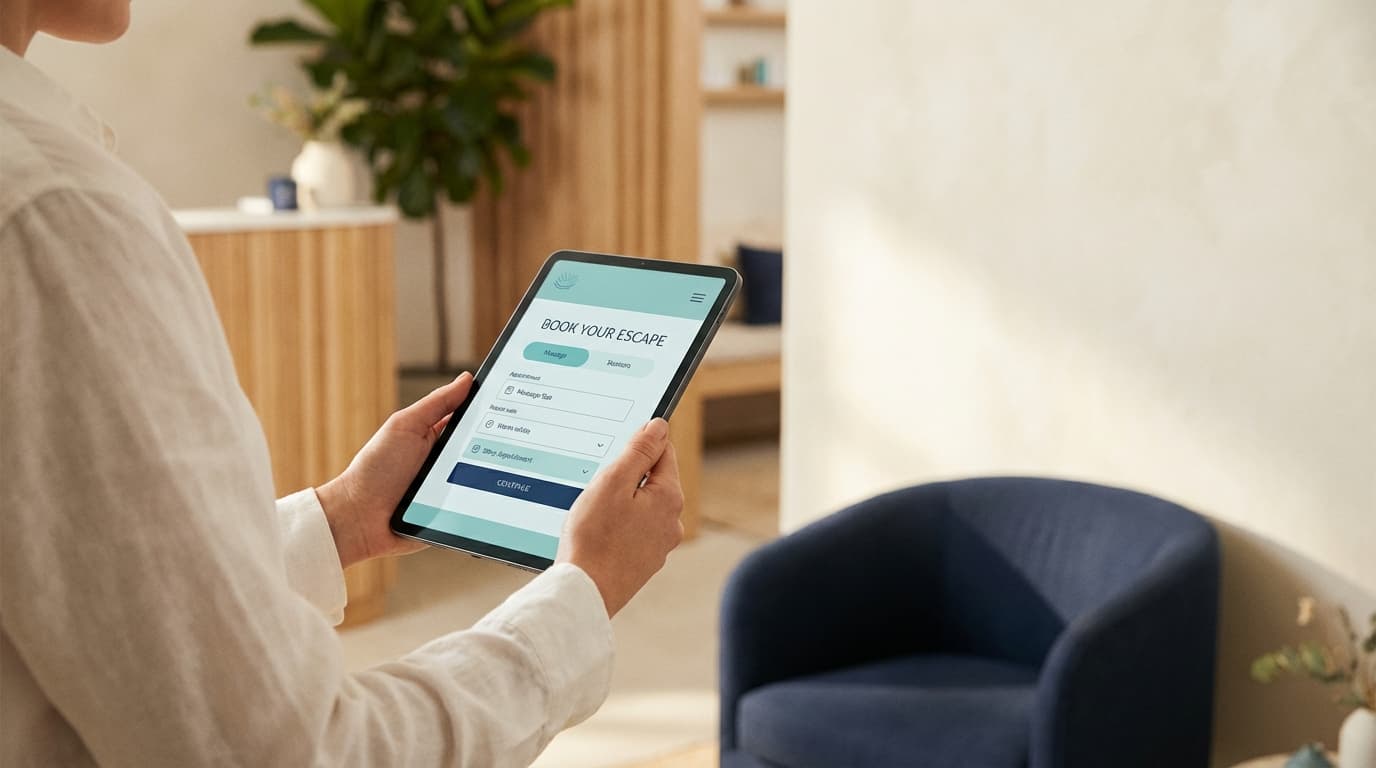
The right booking software lets clients browse your menu, pick their therapist, and book in under two minutes. It collects deposits on premium treatments, sends reminders that cut no-shows, and keeps your rooms filled back-to-back without you playing phone tag between sessions.
Why Massage and Spa Businesses Need Dedicated Booking Software
Generic scheduling tools miss the details that make spa operations work:
- Therapist-specific scheduling where each practitioner has different skills, certifications, and availability
- Room and resource management so you never double-book a couples suite or a hydrotherapy tub
- Service duration variability from 30-minute express massages to 3-hour spa packages
- Deposit collection for premium treatments and packages
- Add-on services like aromatherapy upgrades, hot stones, or CBD oil
- Intake forms for medical history, pressure preferences, and contraindications
When a potential client calls during a session and gets voicemail, they're already searching for the next spa that lets them book online. Every missed call is a missed booking.
The Cost of No-Shows for Spa Businesses
A no-show in a spa doesn't just mean lost revenue — it means a therapist standing idle and a treatment room sitting empty:
| Service | Duration | Typical Price | Lost Revenue |
|---|---|---|---|
| Express Massage | 30 min | $50-70 | $50-70 |
| Swedish Massage (60 min) | 1 hour | $90-130 | $90-130 |
| Deep Tissue (90 min) | 1.5 hours | $130-180 | $130-180 |
| Couples Massage | 1 hour | $180-280 | $180-280 |
| Spa Package (half day) | 3-4 hours | $250-450 | $250-450 |
| Facial + Massage Combo | 2 hours | $160-240 | $160-240 |
For a solo practitioner, one no-show on a Saturday afternoon is a significant hit. For a multi-room spa, a couples massage no-show means two idle therapists and an empty suite.
Spa businesses without deposit requirements report no-show rates of 15-25%. With automated deposits and reminders, that drops to under 5%.
Essential Features for Massage and Spa Booking
Therapist Selection and Profiles
Clients develop loyalty to specific therapists. Your booking system should let them:
- Browse therapist profiles with photos, bios, and specialties
- Book with a preferred therapist or choose "first available" for faster scheduling
- See individual availability so they're not guessing who works Saturdays
- Read specialties and certifications (deep tissue, prenatal, sports massage, lymphatic drainage)
When a client finds a therapist whose pressure is perfect, they'll rebook with that person for years. Make it easy.
Service Menu with Duration Options
Structure your offerings clearly with multiple duration tiers:
- Express (30 min) — Targeted work on one area, lunch break friendly
- Standard (60 min) — Full body treatment, your bread and butter
- Extended (90 min) — Deep work with extra attention to problem areas
- Premium (120 min) — Comprehensive session for clients who want the full experience
Then let clients add upgrades:
- Hot stone add-on (+$20-30)
- Aromatherapy (+$10-15)
- CBD or specialty oil (+$15-25)
- Scalp massage (+$15-20)
- Foot scrub (+$15-20)
- Cupping (+$25-35)
Add-ons increase your average ticket without requiring more room time.
Room and Resource Management
A spa is more than therapists — it's rooms and equipment:
- Treatment rooms — Assign services to specific rooms based on equipment
- Couples suites — Block both sides of the room for couples bookings
- Hydrotherapy tubs/saunas — Prevent overlapping reservations
- Equipment scheduling — Hot towel cabinets, steamers, specialty tables
- Turnover time — Build in 15-minute gaps for room reset and linen change
Your booking system should prevent the scenario where two therapists are confirmed but there's only one open room.
Deposit Collection
Deposits protect your schedule on high-value bookings:
- Express massage (30 min): No deposit needed
- Standard massage (60 min): Optional $25 deposit
- Extended/premium sessions (90-120 min): $40-60 deposit
- Couples massage: $50-75 deposit
- Spa packages (half/full day): $75-150 deposit or full prepayment
Make deposits non-refundable for cancellations under 24 hours. This filters out tentative bookings and ensures committed clients fill your schedule.
Intake Forms and Health Screening
Massage and spa services involve physical contact. You need information before a client is on your table:
- Medical history (injuries, surgeries, chronic conditions)
- Contraindications (blood clots, skin conditions, pregnancy)
- Pressure preferences (light, medium, firm, deep)
- Areas to focus on (neck/shoulders, lower back, full body)
- Areas to avoid (recent injury, sensitive areas)
- Allergies (latex, specific oils, fragrances)
- First visit vs. returning client
Collect this digitally before the appointment so therapists can review it and prepare — not while the client is already in the robe wondering why they're filling out a clipboard.
Automated Reminders
A solid reminder sequence for spa appointments:
- Booking confirmation — Immediately (include deposit receipt, service details, arrival instructions)
- Prep reminder — 24 hours before (hydrate, avoid heavy meals, arrive 10-15 minutes early for first visits)
- Day-of reminder — Morning of appointment (include address, parking instructions, what to wear)
- Post-visit follow-up — 24 hours after (thank you, feedback request, rebooking prompt)
The prep reminder matters for spa services. Clients who arrive rushed, dehydrated, or late disrupt your entire afternoon schedule.
Setting Up Your Spa Booking Flow
Step 1: Define Your Services
Create distinct bookable services with clear pricing:
| Service | Duration | Price | Deposit | Room Required |
|---|---|---|---|---|
| Express Massage | 30 min | $60 | None | Standard |
| Swedish Massage | 60 min | $110 | $25 | Standard |
| Deep Tissue | 60 min | $125 | $30 | Standard |
| Deep Tissue | 90 min | $170 | $40 | Standard |
| Hot Stone Massage | 75 min | $150 | $35 | Standard |
| Couples Massage | 60 min | $220 | $60 | Couples Suite |
| Prenatal Massage | 60 min | $120 | $25 | Standard |
| Spa Package (Half Day) | 3 hours | $350 | $100 | Multiple |
| Facial | 60 min | $100 | $25 | Facial Room |
Step 2: Create Your Intake Form
Collect what you need before the first appointment:
- Full name and contact information
- Medical history and current conditions
- Medications (blood thinners, muscle relaxants)
- Pregnancy status
- Allergies (oils, lotions, latex)
- Pressure preference
- Areas of focus and areas to avoid
- Previous massage or spa experience
- How they heard about your business
For returning clients, surface their previous intake and ask only if anything has changed.
Step 3: Configure Scheduling Rules
Set boundaries that protect your workflow:
- Minimum lead time — 4 hours for standard massages, 24 hours for couples and packages
- Buffer between appointments — 15 minutes for room turnover and linen change
- Therapist-specific availability — Each practitioner sets their own hours
- Room capacity limits — Never book more sessions than you have rooms for
- Back-to-back limits — Cap consecutive deep tissue sessions per therapist to prevent burnout
- Blackout dates — Block holidays, training days, and time off
Step 4: Define Cancellation Policies
Be transparent and display these during booking:
- Cancellations 48+ hours out: full deposit refund
- Cancellations 24-48 hours: 50% deposit retained
- Cancellations under 24 hours: deposit forfeited
- No-shows: deposit forfeited, future bookings require full prepayment
- Late arrivals over 15 minutes: session shortened, full price applies
Late arrivals are especially disruptive in spas. If a 2pm client shows up at 2:20, you can't push the 3pm back. Make the policy clear upfront.
Managing a Multi-Therapist Practice
If your spa has multiple practitioners, your booking system should handle:
- Individual therapist profiles with photos, specialties, and bios
- Certification-based service routing — Only certified prenatal therapists appear for prenatal bookings
- Client-therapist matching — Returning clients see their preferred therapist first
- Workload distribution — Balance bookings across your team to prevent burnout
- Individual schedules — Part-time, full-time, and contractor availability in one view
- Commission or revenue split tracking — Track services per therapist for payroll
Your senior deep tissue specialist and your new hire shouldn't have the same booking permissions. Route clients to the right therapist based on what they need.
Selling Packages and Gift Cards
Packages and gift cards are major revenue drivers for spas:
Packages
- Series discounts — Buy 5 sessions, get the 6th free
- Monthly memberships — One massage per month at a reduced rate, with rollover credits
- Spa day bundles — Massage + facial + body scrub at a package price
Your booking system should track remaining sessions, auto-apply package pricing, and remind clients when their package is running low.
Gift Cards
Gift cards often account for 15-25% of spa revenue, especially around holidays:
- Sell digital and physical gift cards through your booking system
- Let recipients redeem online when booking
- Track balances and expiration dates
- Promote gift cards during peak gifting seasons (Mother's Day, Valentine's Day, holidays)
Gift card recipients become new clients. Make their first booking experience seamless.
Seasonal Demand Patterns
Spa bookings follow predictable patterns you can plan around:
- January-February — New Year's resolutions and self-care commitments. Promote memberships and packages.
- March-May — Mother's Day drives gift card sales. Pre-wedding spa packages for spring weddings.
- June-August — Vacation season means inconsistent regulars but tourist traffic. Promote express services.
- September-October — Clients return to routines. Push recurring bookings and fall wellness packages.
- November-December — Holiday gift card season. Your busiest gift card sales period. Extend hours and add weekend availability.
Adjust your availability and promotions through your booking system to match these cycles.
Marketing Your Booking System
Once your system is live, drive traffic to it:
- Add a "Book Now" button to your Google Business Profile
- Link booking from your Instagram and Facebook bios
- Feature your treatment menu with direct booking links on your website
- Include the booking URL on business cards, signage, and in-room materials with a QR code
- Set up Google Ads for "massage near me" and "spa near me" pointing to your booking page
- Send rebooking prompts to clients who haven't visited in 6+ weeks
- Partner with local hotels and gyms for referral traffic
Every touchpoint should lead to a booking page, not a phone number.
Measuring Success
Track these metrics monthly:
- Booking volume: Total appointments scheduled
- No-show rate: Target under 5% with deposits and reminders
- Average ticket value: Track success of add-ons and upgrades
- Room utilization rate: Percentage of available room-hours that are booked
- Therapist utilization: Hours booked vs. hours available per therapist
- Repeat client rate: Returning customers (target 65%+ for massage)
- Package and membership revenue: Recurring revenue from committed clients
- Gift card sales and redemption: Track seasonal spikes and new client conversion
Use this data to optimize pricing, staffing, and room allocation.
Common Mistakes to Avoid
- No room management: Double-booking treatment rooms is a fast way to lose both clients and therapists
- Skipping deposits on premium services: A couples massage no-show on Valentine's Day is two therapists and a suite sitting empty
- Flat pricing across all therapists: Your therapist with 15 years of experience and advanced certifications should command a higher rate
- No buffer time between sessions: Therapists need room turnover, linen change, and a moment to reset — back-to-back with zero gaps leads to burnout and sloppy setups
- Ignoring intake forms: You need to know about blood clots, pregnancy, and recent surgeries before anyone is on your table
- Not promoting packages and memberships: One-off clients are expensive to acquire — recurring memberships stabilize your revenue
Getting Started
If you're still managing appointments through phone calls, a paper book at the front desk, or a shared Google Calendar, you're spending hours each week on scheduling that could run itself. An online booking system captures clients at the moment they're ready to book — midnight on a Tuesday, lunch break on a Thursday — not just when your front desk is staffed.
Look for a solution that handles therapist-specific scheduling, room management, deposits, and intake forms. Your rooms will fill faster, your no-shows will drop, and your therapists can focus on what they do best — helping clients feel better.
Ready to streamline your spa business? Start your free trial and see how much time you save in the first week.