On this page
Sales season is when every store turns to inventory and marketing, and the default perk is a discount. What if the perk was not money off, but something only your brand and your team can give?
If you sell products, it is a session added to the product. A coffee maker with a barista class. A leather jacket with a styling session. A knife set with a virtual chef lesson.
If you sell experiences, it is a prepaid pack of visits. Four sauna sessions, a set of tastings, a term of classes, bought in the sale and booked across the quieter months that follow.
The numbers above, from our stores last Black Friday, say customers are ready for both. Appointments barely moved. Packages sold at two and a half times their normal rate and stayed high through Cyber Monday. That gap is how people shop in a sale, and once you see it the whole weekend reads differently.
Why buying and scheduling are different decisions
A discount asks one question: is this worth the money? Your customer answers it in seconds, with a card already saved.
A booking asks a second, harder question: which Tuesday in February are you free? That one needs a calendar, a partner consulted, a school run checked. It is the question people put off, and Black Friday is the worst possible moment to ask it. Nobody is planning their February on the sofa after dinner.
So the checkout that says pay now, choose your date later converts. The one that demands a date first does not.
The second thing happening that weekend is that people are not shopping for themselves. They are shopping for other people, with a deadline. A booking page assumes the buyer is the person who turns up, which quietly excludes the entire reason most people are on your site in November.
Both problems have the same fix. Sell the experience now, and let whoever ends up using it pick the date later.
What to sell in the sale
Your inventory splits in two, and only one half belongs in a Black Friday offer.
Anything with a date already on it sells on its own merits. Santa sessions, wreath workshops, a festive tasting. These are bought for a specific holiday or event, they sell early or not at all, and a discount weekend does very little for them.
Anything without a date yet is what sales like Black Friday are for. Prepaid packages, an experience given as a gift, a lesson or showroom visit that comes with an order. Bought in the sale, redeemed whenever suits.
The rest of this guide is about the second kind. It fills your Q1, which is the harder problem and the bigger prize.
Buy now, book later
A package is a block of sessions paid for now and booked whenever the customer is ready. One Shopify order, a balance of credits, and a booking link they spend over the following months.
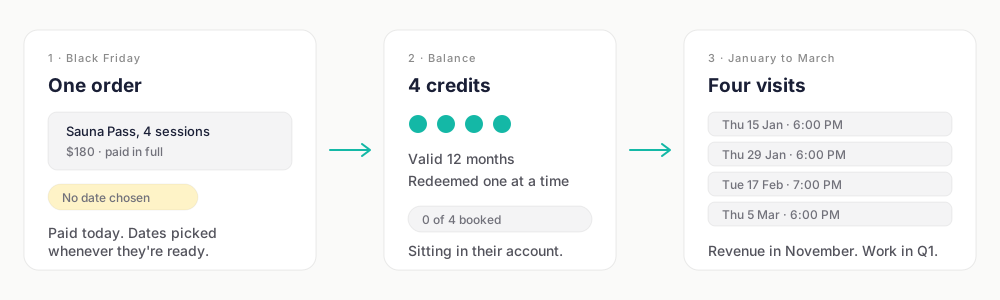
For a business with fixed capacity this is the only Black Friday offer that scales. You cannot sell more Saturdays than you have. You can sell a hundred packages on a Friday night without touching the weekend's schedule.
Arctic Heat Retreat in Langley runs contrast therapy, sauna then cold plunge. It is a repeat-visit business, which is the shape a package fits: the customer already knows they want to come back four times, so selling those four at once removes three separate decisions. The Hot Box Sauna, now across nine locations, sells the same way.
Build three: a small pack of two or three sessions, your signature bundle, and a larger one. Price each below the sum of its sessions, and set expiry at six or twelve months so redemptions land in your quiet months.
Packages and gifting are on the Pro Plus plan and above.
Measure: packages sold over the weekend against a normal week, then redemption rate by the end of February. A package nobody redeems is a refund request with a delay on it.
Gift an experience
The same package, addressed to someone else. The buyer adds a recipient, a message and a send date. The booking link goes to the recipient.
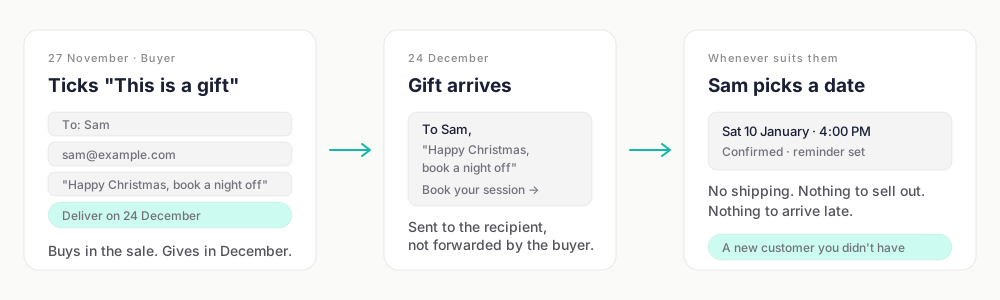
Two things make this the strongest December offer a booking business has. It cannot arrive late, and it cannot sell out. Every physical gift in your store competes with a shipping cutoff and a stock level. This one competes with neither, and it keeps selling on the 23rd when everything else has stopped.
The send date is what to build the campaign around. Sell it on Black Friday, have it arrive on Christmas Eve. That quietly extends your sale weeks past Cyber Monday.
Workshops and classes gift better than appointments. A pottery evening for two is a present.
Set a long expiry on anything giftable. The clock starts when the package is bought, not when the gift is opened. Sell on Black Friday with a 30-day expiry and your recipient unwraps a gift on Christmas Day with four days left on it.
Measure: the share of packages redeemed by someone other than the buyer. If gifting is working, that number climbs. If it stays near zero, your gift offer is being bought by people for themselves.
Attach a session to a product
The Black Friday order is an espresso machine, a bike, a sewing machine, a sofa. The offer is the thirty minutes that makes it worth more: a discovery session on the machine, a proper bike fit, a first lesson, a check-in call two weeks in.
It rides along with the order and gets booked when the customer is ready, so the sale closes on Friday and the visit happens in January.
This is the cleanest margin argument here. Twenty percent off a $500 machine costs $100. Half an hour of staff time in your quietest month costs you very little, and to the customer the two look similar in value. One of them also puts your team in a room with a new customer.
It is also the offer a marketplace cannot run against you. Anyone can sell the same machine cheaper. Nobody else can teach the buyer to use it.
Measure: what proportion of attached sessions actually get booked. A low rate usually means the booking link is buried in the order confirmation. Send it again when the product arrives.
An exclusive showroom visit
For orders over a threshold, skip the discount and send those buyers an invitation to a private, in-person showroom appointment. The link goes to Black Friday customers and nobody else. A fitting, a styling session, a design walkthrough, a tasting. The perk is the personalization: time with your team, set up around them.
It costs you a slot and no margin, and it turns an online buyer into someone who has walked your floor and met the people behind the brand.
A quarter of the bookings we see in Q4 already run through the free, no-checkout flow, so customers are used to booking something that costs nothing. Among guests who book, a meaningful share go on to buy other products from the same store, and you can see that figure for your own store in Reports.
Set it up as a $0 booking so it still carries a time, a reminder and a check-in. Cap it at one guest per slot, set a 24-hour lead time, and add a cutoff so nobody books a slot starting in ten minutes.
Check the customer in on your POS when they arrive. The visit lands on their customer record, so anything they buy while they are with you is attached to it.
Measure: show rate first, because a visit nobody attends is worse than no offer. Then post-visit revenue, which is the point.
Open your January calendar early
Publish Q1 dates before Black Friday and give them an early-booking price for the weekend only.
Customers already book further ahead than they used to, and that share climbs every year. The behaviour is there. Most merchants have not opened the dates, so the customer who was willing to commit to a Saturday in February found nothing to commit to.
This is the cheapest offer here. It needs no discount and nothing new to build, only dates you were going to run anyway, opened a few weeks earlier than usual.
Measure: how many Q1 bookings land during the sale weekend. Those are visits you would otherwise have sold in January, with the cash arriving two months sooner.
The perk is your brand and your team
A discount is the one offer every store can match. Everything above is what only your brand and team offer: sessions sold ahead, a lesson that comes with the product, an hour in your showroom, a date on your January calendar.
You don't need all 5 - just pick one! Set it up before the sale starts, then buy it yourself with a real card to check it works end to end.
Want a hand setting up your offer? Email us at hey@getservicify.com or open the chat in the bottom right, and we'll help you build it before the sale.
Figures come from bookings and packages across Easy Appointment Booking stores.
If your bookings still live outside your Shopify store, Easy Appointment Booking brings them in: one checkout, one customer list, and packages that sell like any other product.